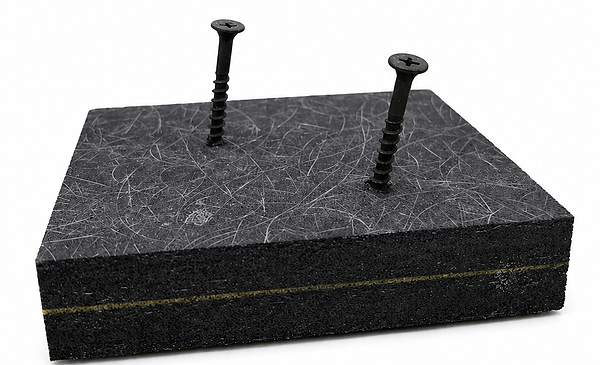
Coosa Board
Reliable and Resilient
Reinforced Polyurethane Foam (RPF), commonly called "Coosa", is a high-performance composite material combining the lightweight core of closed-cell foam with the strength and rigidity of fiberglass reinforcement. This combination results in a material that is exceptionally lightweight, yet highly durable and structurally stable. The closed-cell foam core ensures zero water absorption, making the material completely rot-proof and resistant to moisture, mildew, and corrosion. These properties make RPF an ideal choice for applications in marine, transportation, architectural, and industrial sectors where strength, weight reduction, and long-term durability in harsh environments are critical.
Engineered for
Performance
-
Rot-Proof
-
Screw-Retention
-
Zero Water-Absorption
-
Lightweight
-
Long-Lasting Durability

Sandwich Panel Core
Coosa board makes for an exceptional core in sandwich panels due to its remarkable strength-to-weight ratio and resistance to water, rot, and delamination. Coosa board provides structural integrity while significantly reducing overall panel weight. Its durability and moisture resistance make it ideal for marine, transportation, and industrial applications where traditional wood cores would degrade over time. Using Coosa as a core enhances the longevity, performance, and ease of handling of composite panels.

Coosa for Boat Transoms
Coosa Board is commonly used for boat transom repair and construction. Its closed-cell foam composition, reinforced with layers of continuous strand fiberglass, provides exceptional strength-to-weight performance while eliminating the risk of rot, water absorption, and long-term structural degradation associated with plywood.
In transom construction, Coosa Board serves as the primary core material bonded between fiberglass skins using marine-grade resins such as polyester, vinyl ester, or epoxy. Its high compressive strength and screw retention capabilities allow it to effectively support outboard engines, sterndrives, and associated hardware loads. Unlike wood, Coosa maintains its structural integrity even after prolonged exposure to moisture, making it ideal for harsh marine environments.
The material is available in multiple densities (e.g., Bluewater 26 and Bluewater 20), allowing engineers and fabricators to select the appropriate balance of stiffness, weight, and mechanical performance for specific vessel requirements. It can be easily machined, cut, and shaped using standard woodworking tools, facilitating efficient fabrication and retrofit processes.
When used in transom assemblies, Coosa Board is typically laminated into the hull structure using vacuum bagging or hand lay-up techniques. Proper surface preparation and resin saturation ensure optimal adhesion between the composite core and fiberglass skins, resulting in a monolithic structure capable of distributing dynamic loads and resisting flexural fatigue.
Overall, Coosa Board enhances transom longevity, reduces maintenance requirements, and improves overall vessel performance by providing a lightweight, durable, and moisture-resistant alternative to traditional wood core materials.